

Open to Research Collaborations

ShamimKheirani

Graduate Researcher · Cognitive Science, HCI & AI

Exploring the frontier of the human mind — bridging cognitive science, human–computer interaction, and artificial intelligence to build a deeper understanding of how we think, learn, and interact with technology.

Cognitive ScienceHCIArtificial IntelligenceNeuroscienceUX Research
Shamim Kheirani
A Little About Me

A Little About Me

I am a graduate researcher in Cognitive Science and Human–Computer Interaction, currently based in Italy. My interest in the human mind and cognition did not begin with my formal academic training; it emerged much earlier as a sustained curiosity about how thinking, understanding, and experience take shape. This long-standing interest gradually found expression through different stages of my education and work, well before my entry into cognitive science as a formal field of study.

Before pursuing advanced academic training, I worked as a teacher in preschool and early childhood settings. During this period, my curiosity about cognition took a practical form, centered on observing how cognitive abilities emerge and develop in children. This experience allowed me to engage directly with questions about perception, learning, and understanding at an early developmental stage, and played an important role in shaping the direction of my later academic path.

Over time, this enduring curiosity led me toward cognitive science as a necessary lens for understanding the mind in a systematic and interdisciplinary way. What began as an intuitive interest has continued to evolve into a focused academic trajectory, grounded in the study of cognition and sustained by a long-term commitment to understanding the human mind.


EDUCATION & TRAINING

EDUCATION & TRAINING

Bachelor's DegreeUniversity of Isfahan

EQF 6
Field(s) of study
Educational Sciences
Final grade
17.31/20
Type of credits
ECTS (equivalent)
Number of credits
140

Master's DegreeUniversity of Messina

EQF 7
Field(s) of study
Cognitive science and Theory of Communication
Final grade
29.20/30 (current GPA)
Type of credits
ECTS
Number of credits
120
Research Interests

Research Interests

My research interests are situated at the intersection of cognitive science, human–computer interaction, philosophy of mind and Artificial intelligence, with a primary focus on embodiment and agency.

The Human Aspect

I am interested in human subjectivity, motility, and embodied experience, particularly in relation to perception, consciousness, and the sense of agency. I am drawn to embodied and enactive approaches to cognition, as well as to the cognitive mechanisms underlying learning and decision-making.
These interests inform my approach to designing and evaluating interactive systems that are sensitive to human perception, action, and meaning-making.

Key Focus Areas

Subjectivity & MotilityEmbodied ExperiencePerception & ConsciousnessConscious IntentionSense of AgencyEnactive ApproachesLearning & MotivationHuman–Centered InteractionCognition in Interactive ContextsEmbodied Interaction

The Artificial Aspect

In parallel, I am interested in artificial intelligence and large language models as interactive systems, particularly in relation to human cognition, human–computer interaction, and learning environments. Rather than treating AI as a purely technical artifact, I approach it as a system that mediates understanding, decision-making, and agency through interaction.

My interests focus on how AI-driven interface design shapes user expectations, trust, and engagement, and how cognitively informed interaction design supports meaningful use of intelligent systems. I am also interested in comparative perspectives on human and artificial cognition and in applying insights from embodiment to the design and evaluation of interactive technologies.

Key Focus Areas

Human–Computer InteractionArtificial IntelligenceLarge Language ModelsArtificial CognitionEducational TechnologiesSystemic Analysis
Projects

Projects

HCI RESEARCH PROJECT

SkillFusion: Designing an AR-Enhanced Skill-Sharing Platform

SkillFusion is a human–computer interaction project focused on designing an augmented-reality-based platform for skill exchange. The project explores how AR, gamification, and user-centered design can support motivation, learning, and social interaction in both online and in-person learning environments.

Research & Design Goals

Core objectives and research questions

  • Support efficient and affordable skill exchange
  • Increase user motivation through gamification
  • Explore AR as a tool for embodied and interactive learning
  • Address trust, safety, and usability in peer-to-peer learning systems

HCI Methods & Process

User-centered design methodology

  • User research and persona development
  • Scenario-based design and use-case modeling
  • Interaction design for AR-supported learning
  • Gamification design (badges, leaderboards, streaks)
  • Usability evaluation using SUS (System Usability Scale)

Key Features

Platform capabilities and functionality

  • AR-supported skill demonstrations
  • Visual skill maps and profile-based matching
  • Gamified learning system (badges, points, streaks)
  • Community interaction and peer feedback
  • AI-assisted skill and course recommendations

Evaluation & Results

Usability testing outcomes and findings

The system was evaluated through usability testing with multiple users using the System Usability Scale (SUS). Results indicated high overall usability, satisfaction, and confidence in using the system, with an average SUS score above industry benchmarks. Key improvement areas were identified in learnability and memorability, informing future design refinements.

What This Project Demonstrates

Skills and competencies showcased

  • Ability to apply HCI theory to real design problems
  • Experience with user-centered and iterative design
  • Interest in embodied interaction and AR-based learning
  • Practical engagement with usability evaluation and design trade-offs
Master’s Thesis (In progress)

Master’s Thesis (In progress)

Master's Thesis (In progress)

Human and Artificial Cognition:
Embodiment, Agency, and the LLM Gap

My master’s thesis examines the cognitive gap between human cognition and large language models, with a specific focus on embodiment and agency. The thesis is motivated by the question of why artificial systems can produce behaviorally similar outputs to humans while lacking experienced agency and ontological grounding.

Drawing on Floridi’s claim that large language models exhibit agency without intelligence, Gahrn-Andersen’s account of the absence of ontological grounding, and the 4E cognition framework, the thesis situates this gap as a substantive cognitive difference rather than a merely technical limitation.

Methodological Approach

Methodologically, the thesis adopts a comparative approach informed by experimental cognitive psychology, following the proposal of Taylor and Taylor. Human participants and large language models are compared on tasks that require embodied knowledge and sensitivity to real-world constraints.

Diagnostic Error Analysis

Rather than focusing on successful performance, the analysis centers on systematic differences in error patterns, using failures as diagnostic indicators of underlying cognitive and agentive limitations.

Through this approach, the thesis aims to clarify how the absence of embodiment and sensorimotor grounding in artificial systems fundamentally distinguishes them from human cognition.

Things I'm Good At

Things I'm Good At

Research Methods

Literature review (systematic & narrative)Experimental MethodsConceptual and philosophical analysisQualitative analysisCognitive task analysisUser-centered research methods

Computational & AI-Related Skills

Python (basic data analysis, experimentation support)Prompt engineering for Large Language ModelsAI-assisted research workflows

Design & Prototyping

Figma (research-oriented prototyping)Adobe Photoshop, IllustratorKrita (illustration and animation)

Academic & Digital Tools

Digital content creation for educational and research purposesAcademic writing and presentation tools
Certifications

Certifications

Professional certifications and training programs that have shaped my expertise in cognitive science, educational psychology, and modern AI tools.

Cognitive behavioral therapist training (CBT)

Cognitive behavioral therapist training (CBT)

Iran Educational Psychology Association

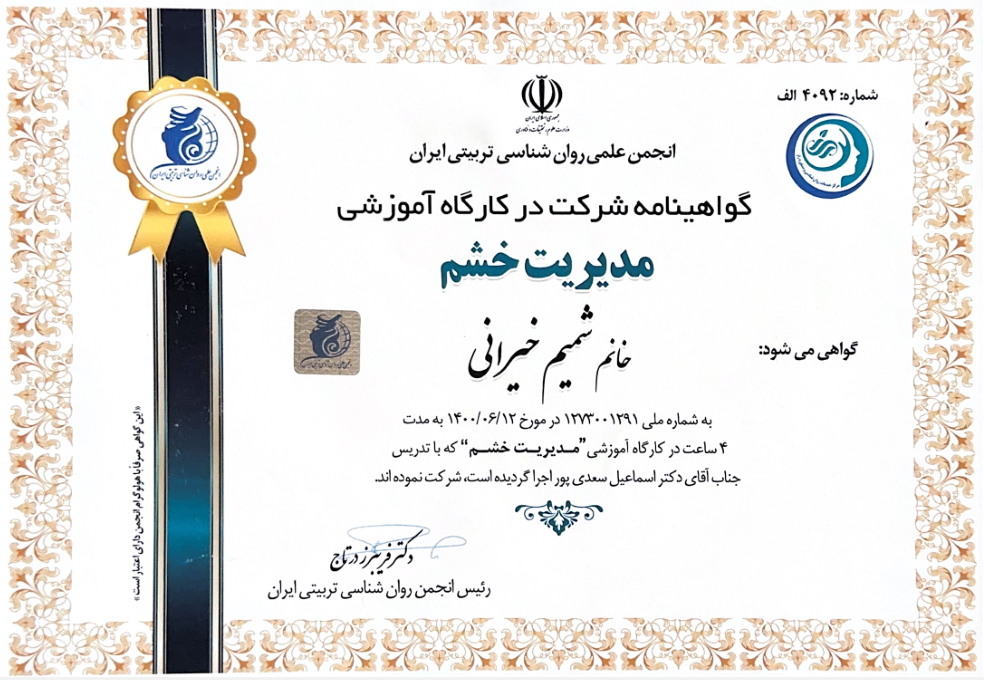
Anger management

Anger management

Iran Educational Psychology Association

Professional ethics in psychology and counseling

Professional ethics in psychology and counseling

Iran Educational Psychology Association

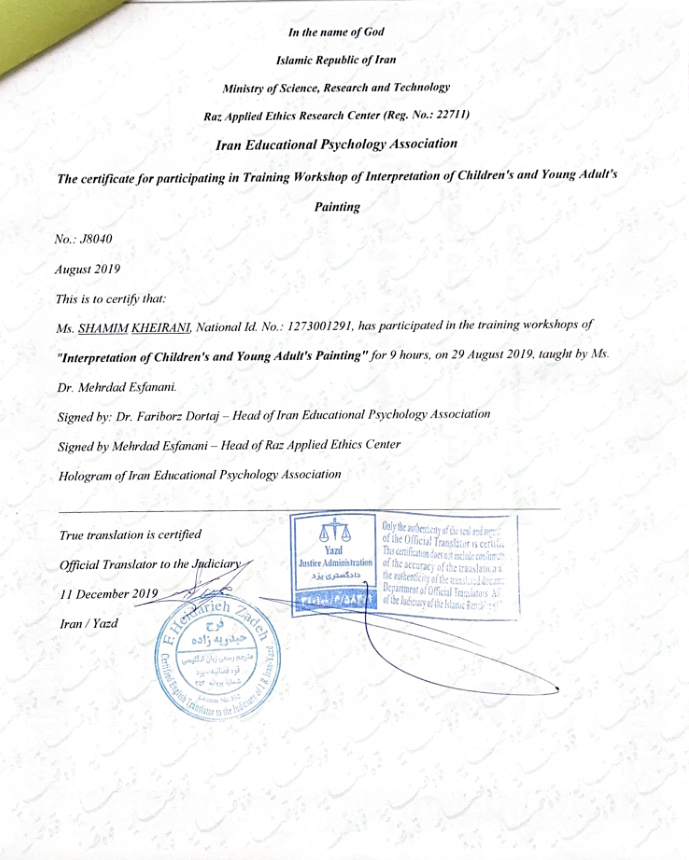
Training workshop of Interpretation of Children's and young adult's painting

Training workshop of Interpretation of Children's and young adult's painting

Iran Educational Psychology Association

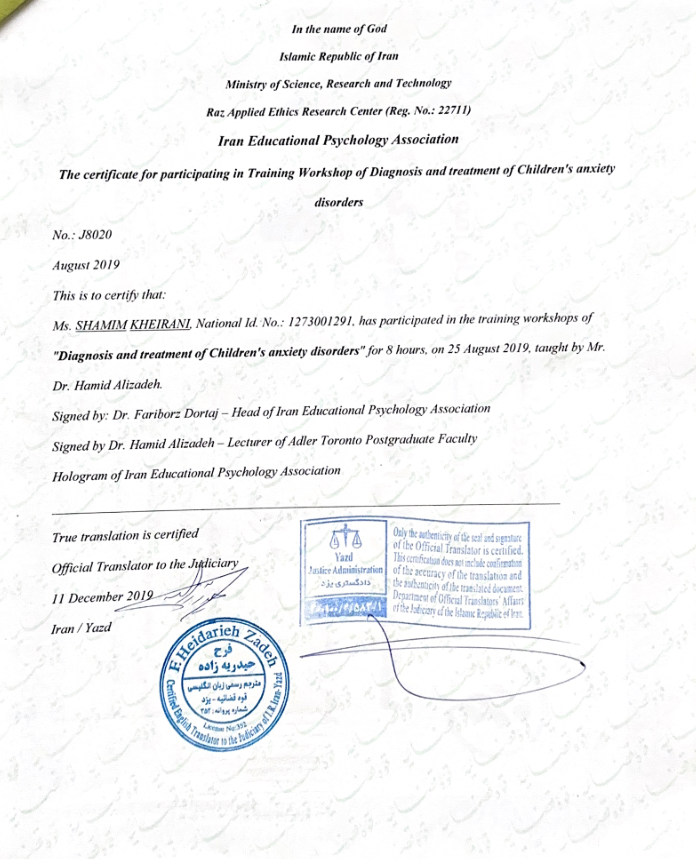
Diagnosis and treatment of Children's anxiety disorders

Diagnosis and treatment of Children's anxiety disorders

Iran Educational Psychology Association

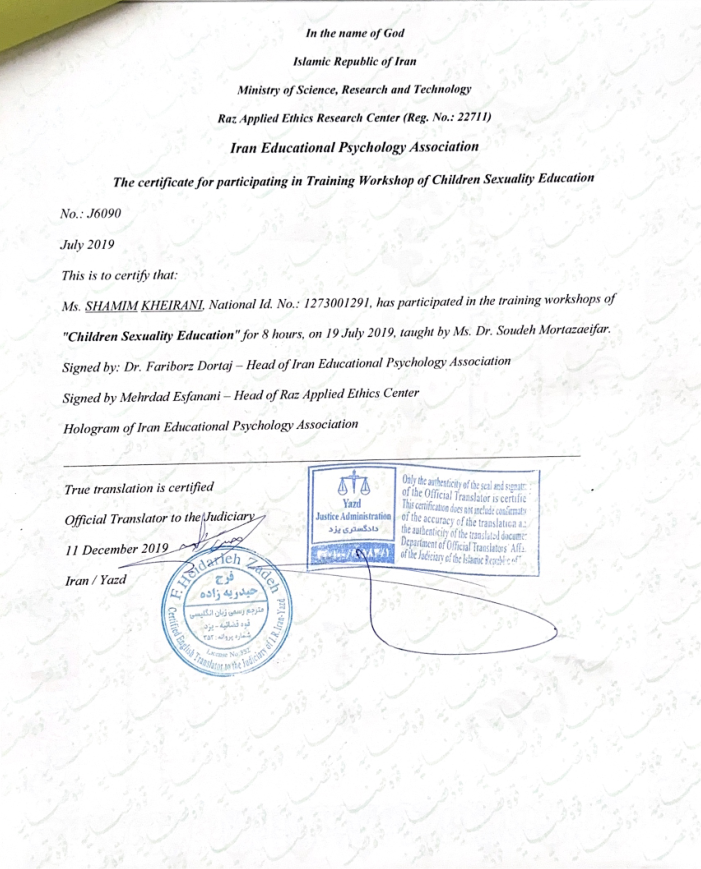
Children Sexuality Education

Children Sexuality Education

Iran Educational Psychology Association

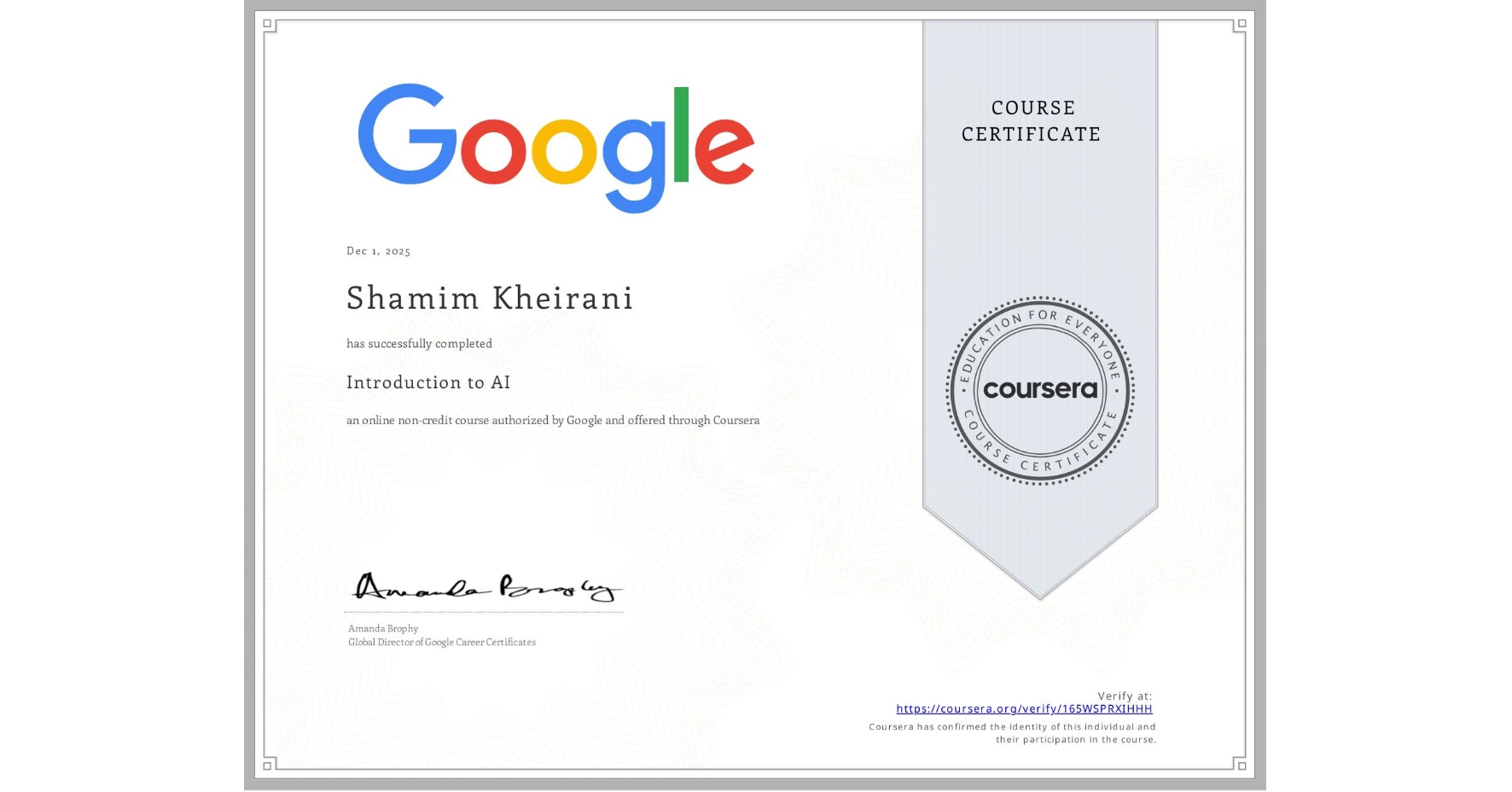
Introduction to AI

Introduction to AI

Google AI Essentials

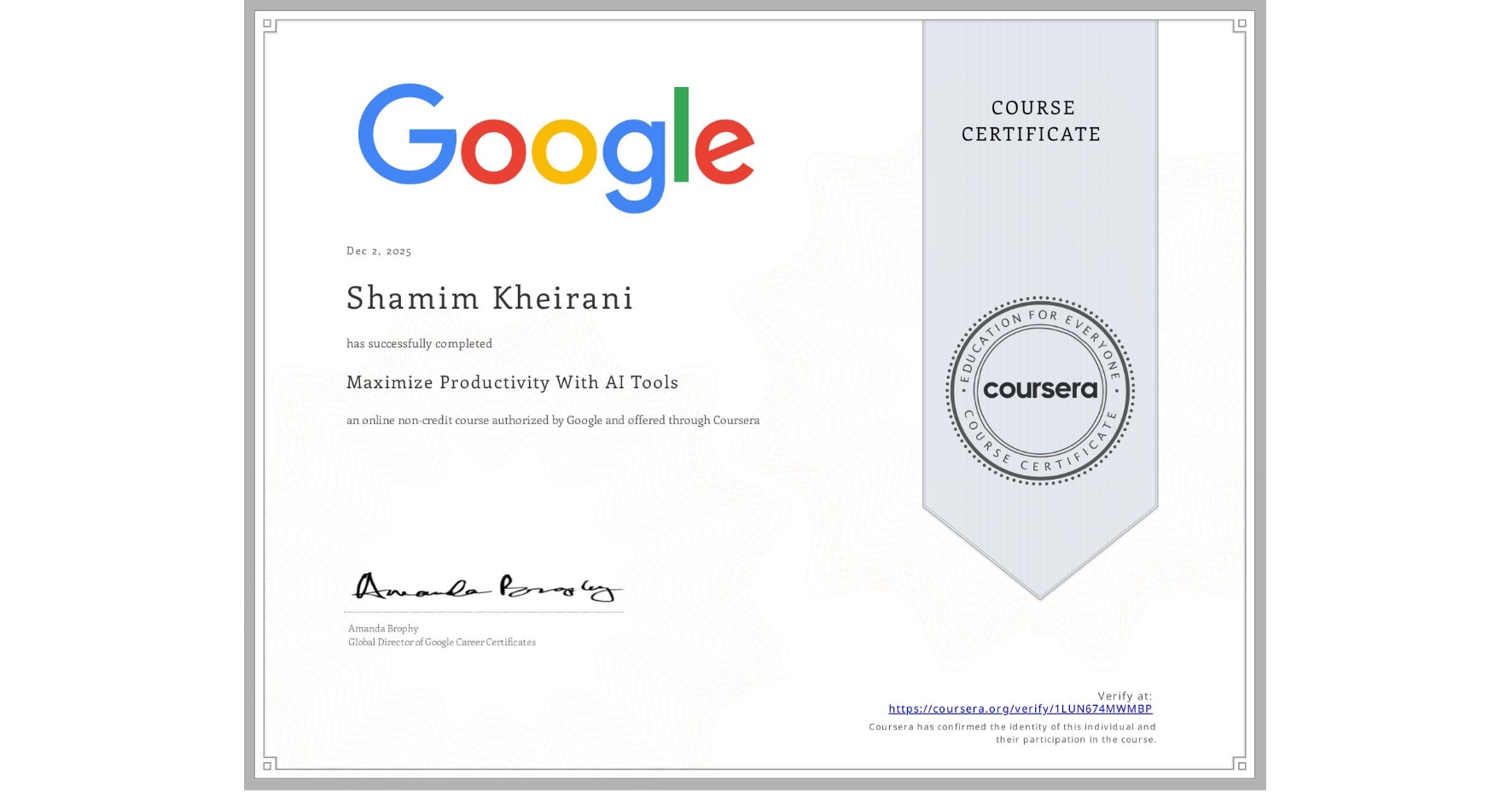
Maximize Productivity With AI Tools

Maximize Productivity With AI Tools

Google AI Essentials

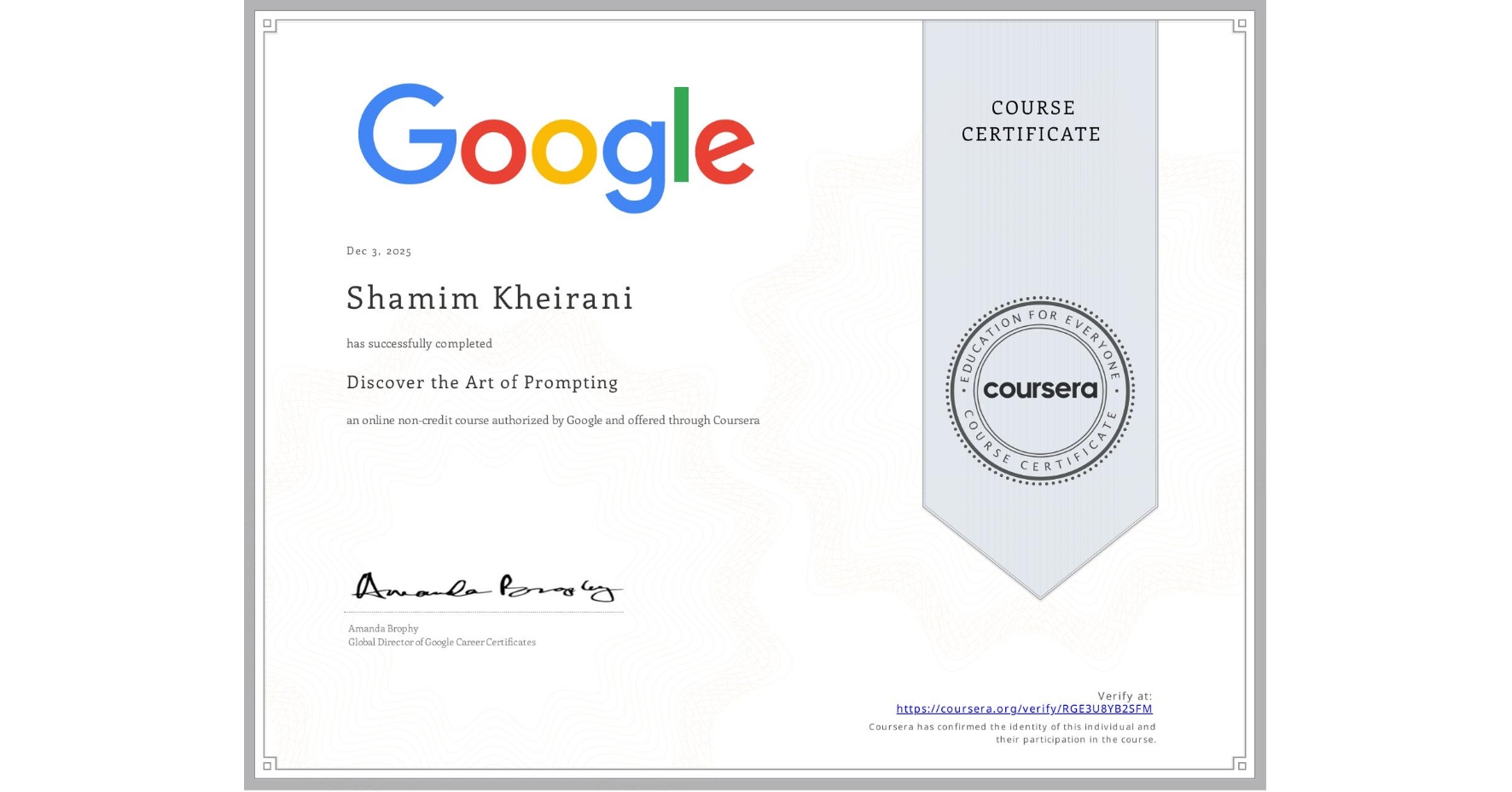
Discover the Art of Prompting

Discover the Art of Prompting

Google AI Essentials

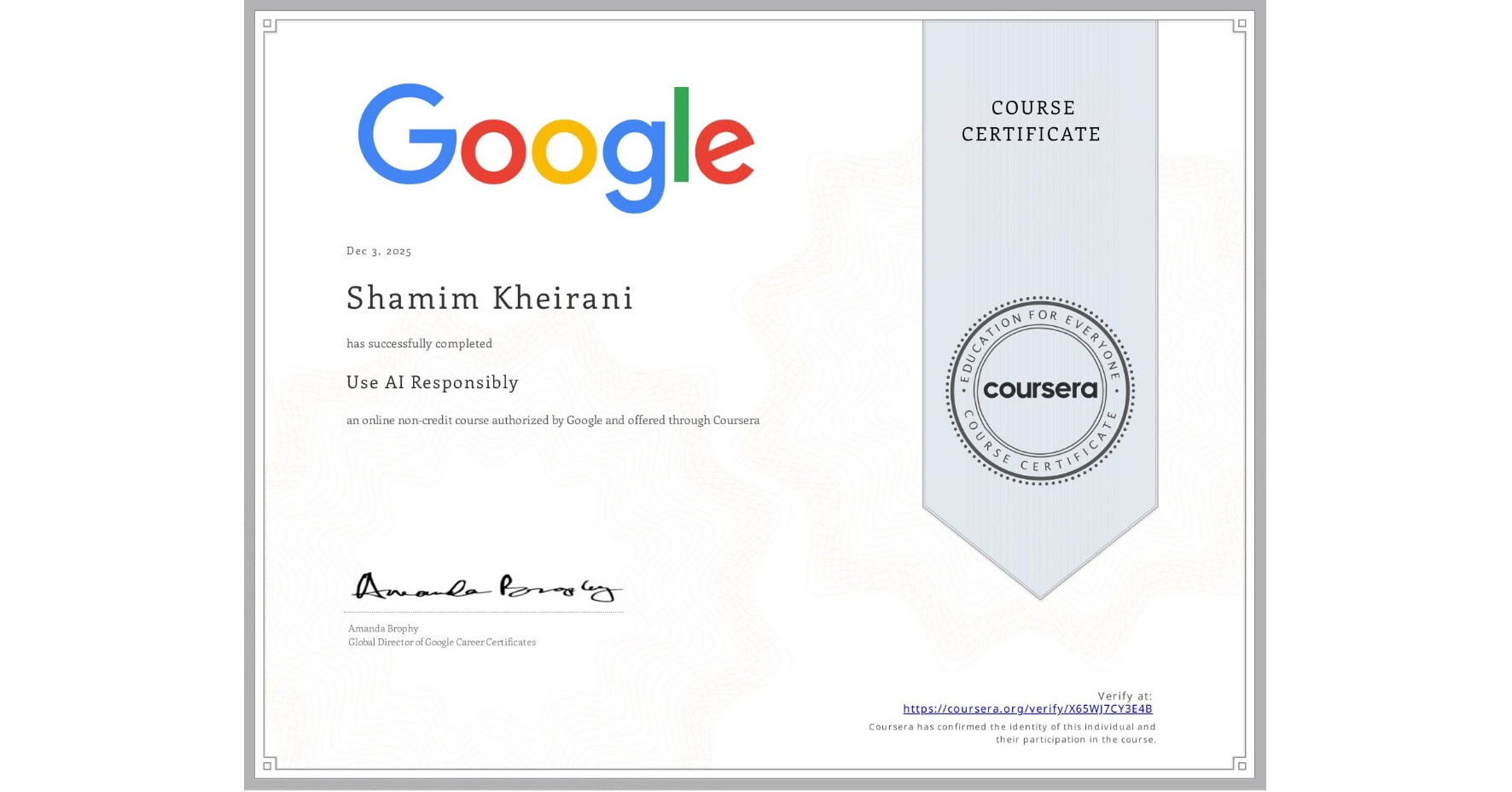
Use AI Responsibly

Use AI Responsibly

Google AI Essentials

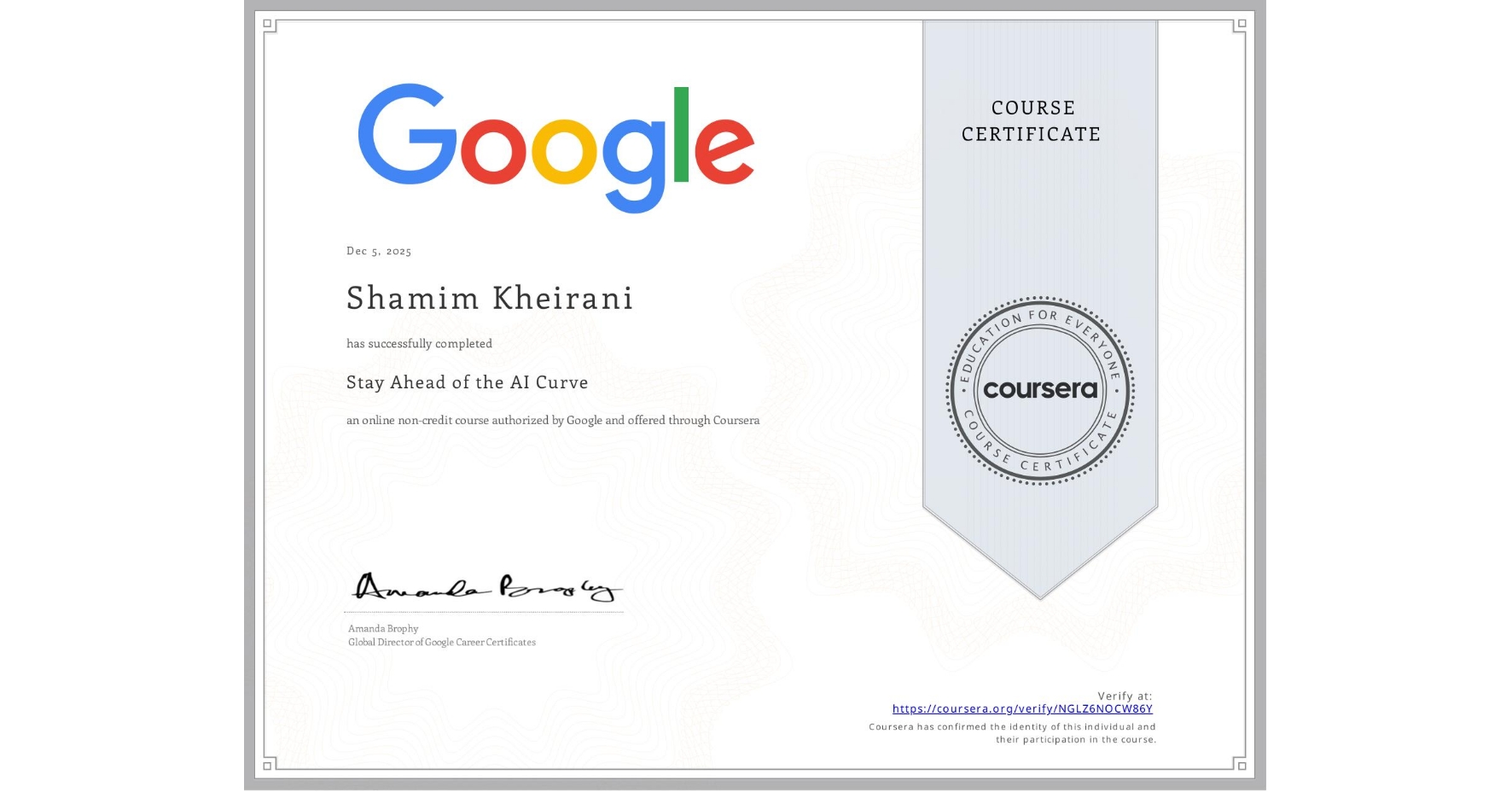
Stay Ahead of the AI Curve

Stay Ahead of the AI Curve

Google AI Essentials

Selected Academic Writing

Selected Academic Writing

A selection of my academic papers and research contributions that showcase my scholarly work in cognitive science, philosophy of perception, and personality psychology. These writings represent my commitment to rigorous academic research and interdisciplinary thinking.

Being in the World: Perception Beyond Representation in Merleau-Ponty

University of Messina

Being in the World: Perception Beyond Representation in Merleau-Ponty

Philosophy of Perception (Master's level)

The paper develops a systematic phenomenological critique of representational accounts of perception, arguing for an embodied conception of perception as world-disclosure. Drawing on Merleau-Ponty's analysis of motor intentionality, habit, and the intentional arc, it examines how perceptual meaning emerges through embodied engagement with the world rather than internal representation.

The Persistence of Suppressed Tendencies: Repression and Indirect Expression in Personality

University of Messina

The Persistence of Suppressed Tendencies: Repression and Indirect Expression in Personality

Research paper

The paper reconceptualizes the persistence of suppressed motives as an effect of symbolic organization rather than failed inhibition. Proposes 'symbolic redirection' to explain how motivational tension remains practically effective through socially legible roles, narratives, and interpretive frameworks, with implications for personality structure and self-regulation.

Languages I Speak

Languages I Speak

Persian (Farsi)

Persian (Farsi)

Native

First language, academic & professional proficiency

English

English

C1 (Proficient)

Academic publishing, international conferences

Italian

Italian

B2 (Upper-Intermediate)

Daily communication, clinical assessments

Work Experience

Work Experience

23/10/2022 - 30/05/2023

Pre-School (Level 2) Teacher

Farhang Kariz Pre-School Center

02/10/2018 - 05/01/2020

Kindergarten Assistant Teacher

Melika Private Kindergarten and Pre-Primary School

Conferences and Academic Activities

Conferences and Academic Activities

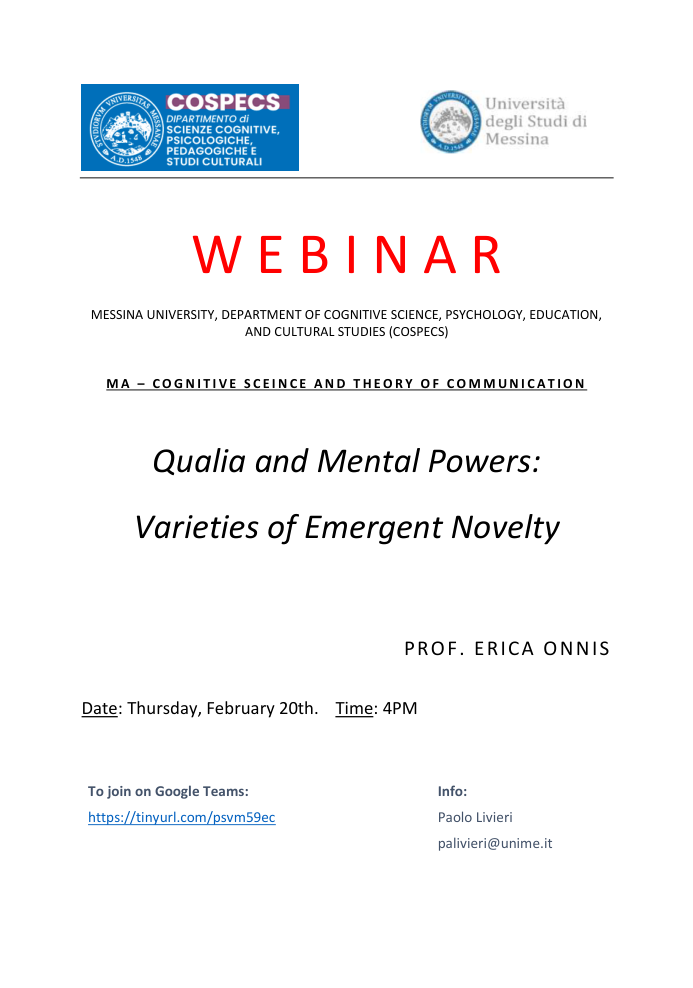
Brain and consciousness concept

Qualia and Mental Powers: Varieties of Emergent Novelty

Scientific webinar (attended)

Academic webinar for the M.A. in Cognitive Science and Theory of Communication, Department of Cognitive Science, Psychology, Education and Cultural Studies (COSPECS).

Philosophical perspectives on qualia, mental powers, and emergent properties of consciousness.

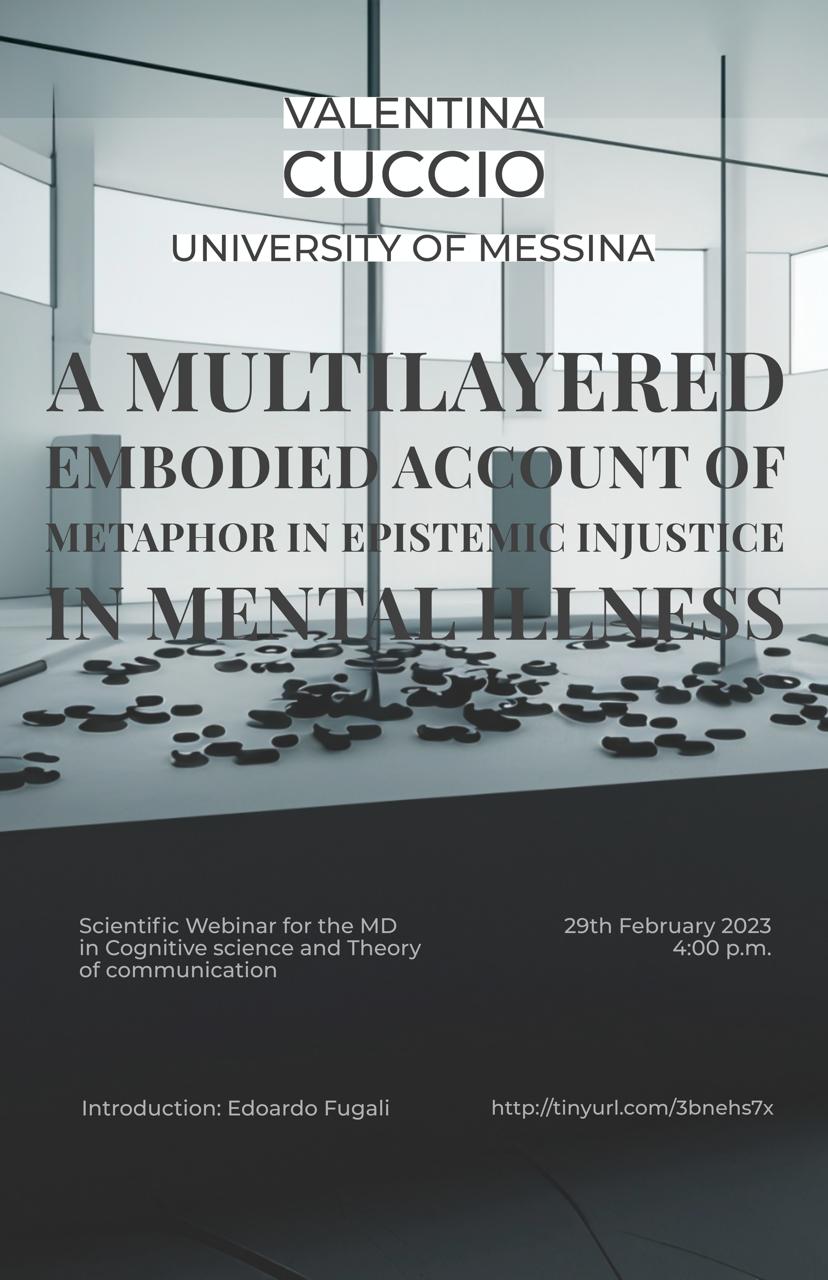
Mental health and metaphor research

A Multilayered Embodied Account of Metaphor in Epistemic Injustice in Mental Illness

Scientific webinar (attended)

Academic webinar for the M.A. in Cognitive Science and Theory of Communication.

Embodied and phenomenological approaches to epistemic injustice in mental illness, with particular attention to metaphor, communication, and schizophrenia.

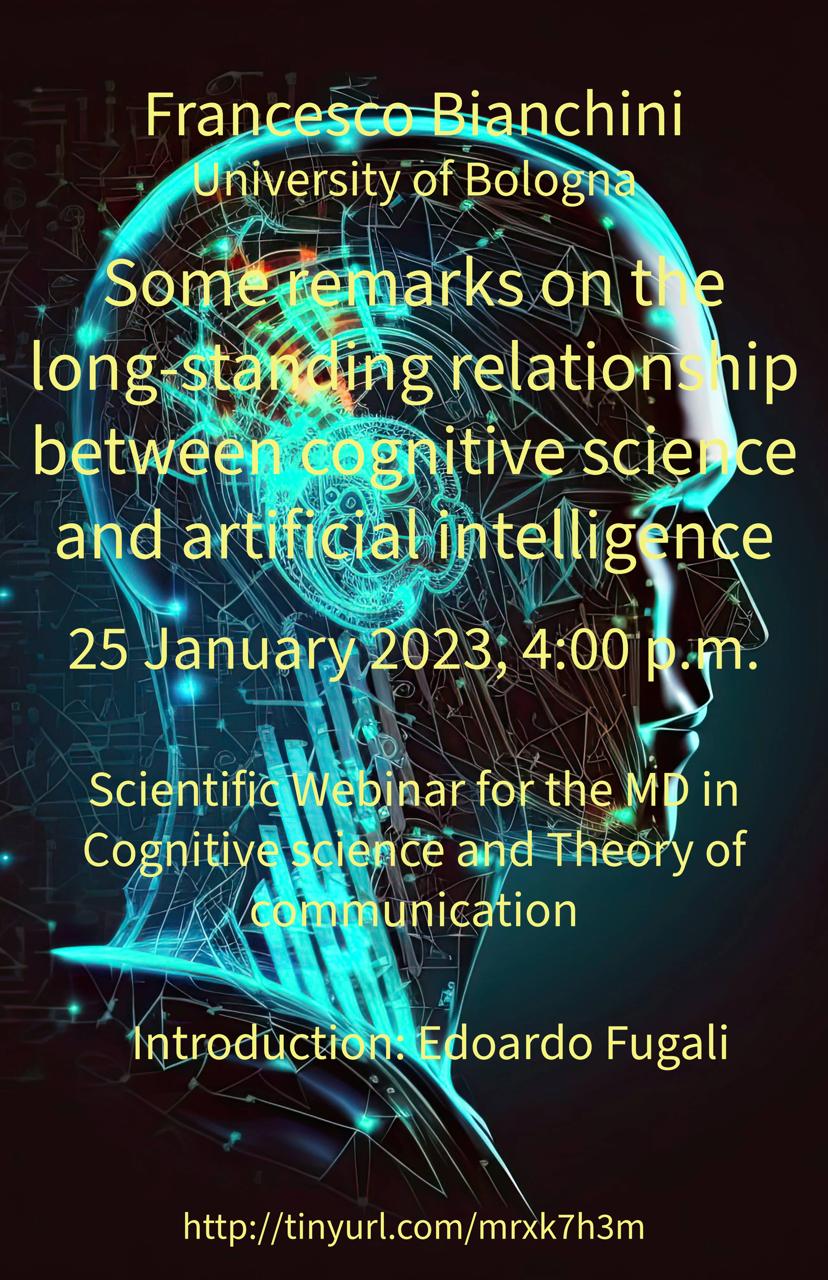
AI and cognitive science relationship

Some Remarks on the Long-Standing Relationship Between Cognitive Science and Artificial Intelligence

Scientific Webinar (Attended)

Academic Webinar for the M.Sc. in Cognitive Science and Theory of Communication.

Exploring the historical and contemporary connections between cognitive science and AI research.

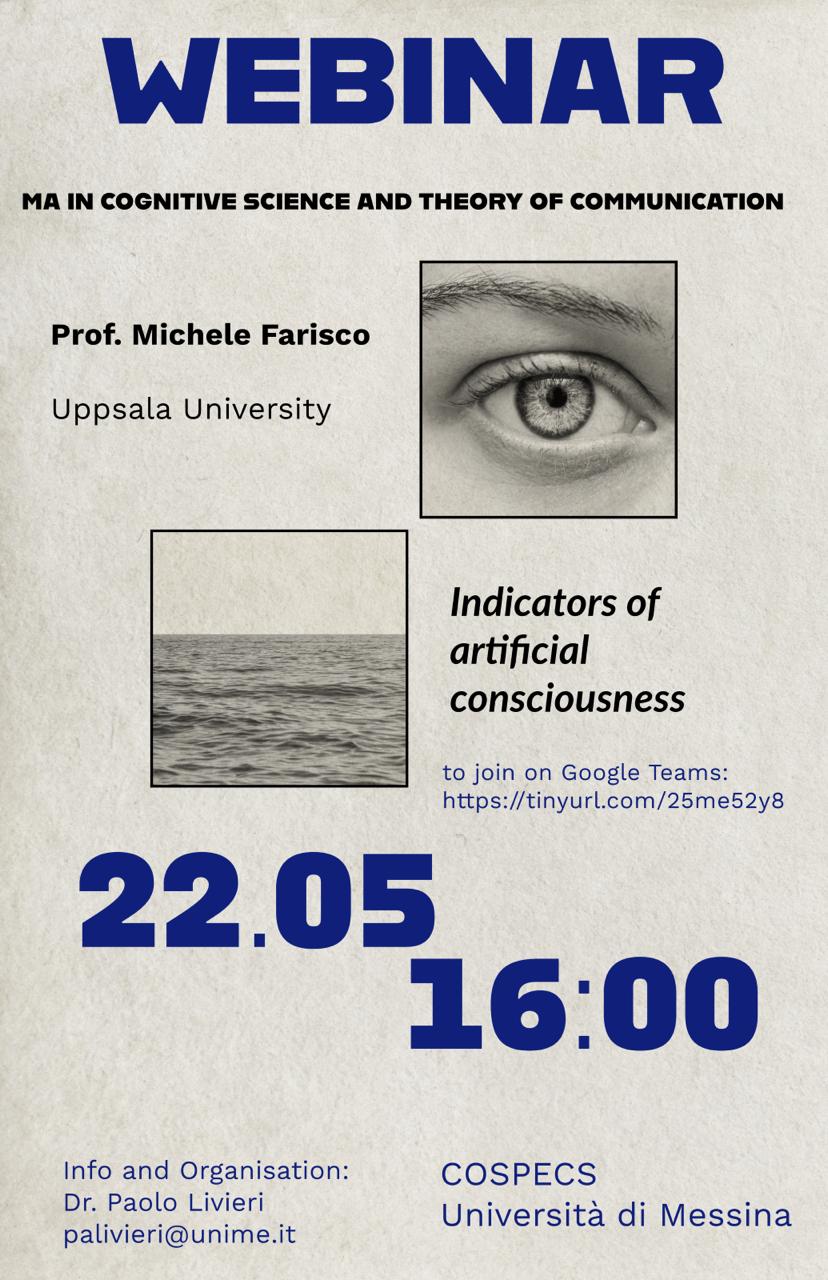
Artificial consciousness indicators

Indicators of Artificial Consciousness

Scientific webinar (attended)

Academic webinar for the M.Sc. in Cognitive Science and Theory of Communication.

Conceptual and philosophical approaches to artificial consciousness and its indicators within contemporary AI research.

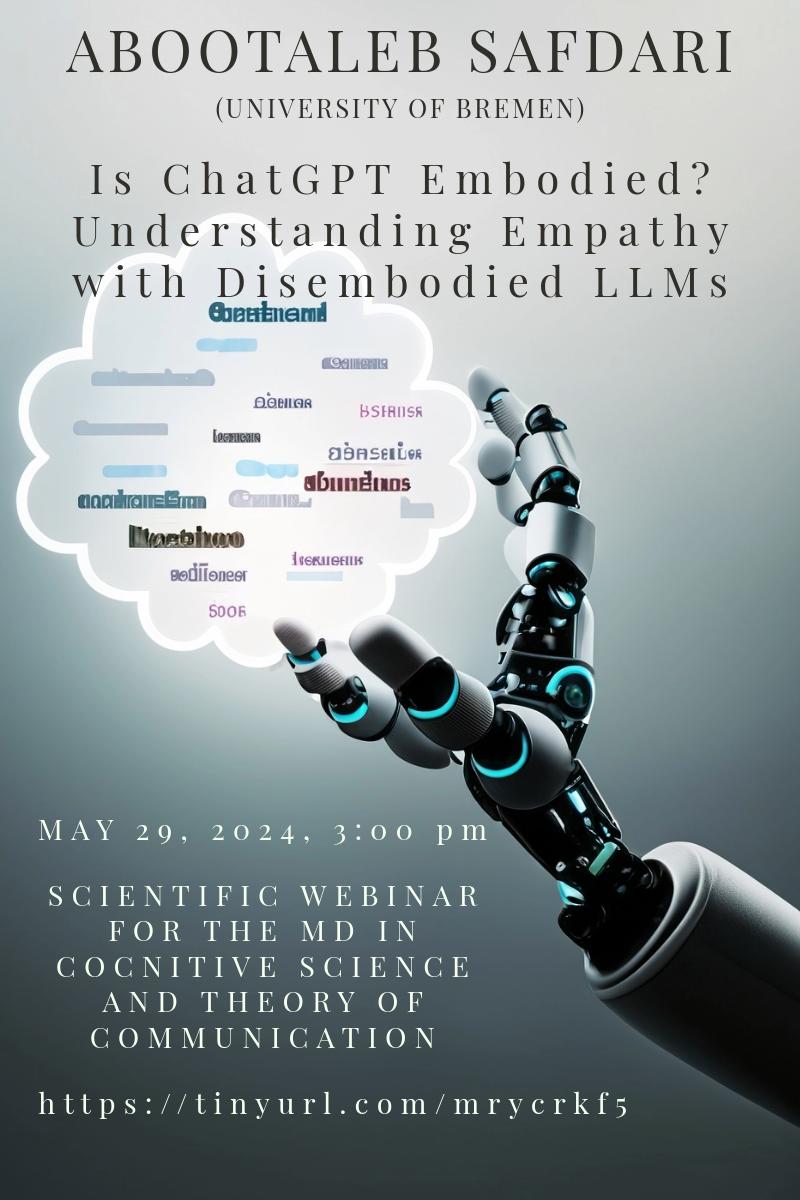
ChatGPT embodiment and empathy

Is ChatGPT Embodied? Understanding Empathy with Disembodied LLMs

Scientific webinar (attended)

Academic webinar for the M.A. in Cognitive Science and Theory of Communication.

Conceptual analysis of embodiment and empathy in large language models, bridging philosophy of mind and contemporary AI research.

Life Outside the Screen

Life Outside the Screen

Outside academic work, I spend time on activities that are part of my everyday life and personal routines, independent of my research and professional commitments.

ReadingCognitive science, philosophy, and good fiction
Digital PaintingColor studies, textures, and quiet late-night sessions
SportStrength, mobility, and a steady routine
Nature & OutdoorsLong walks, fresh air, and small resets
WritingNotes, essays, and reflective journaling
SketchingQuick studies to catch ideas in motion
MusicInstrumentals for focus and mood
TravelMuseums, local cafés, and slow city walks
Let's Connect 💬

Get in Touch

Have a question or want to work together? Drop me a message and I'll get back to you as soon as possible!

📮Send a Message
I'd love to hear from you!

I'll use this to get back to you.

0/500

Typically responds within 24-48 hours ⏰